
 Person in charge: Sidonia Martínez Suárez
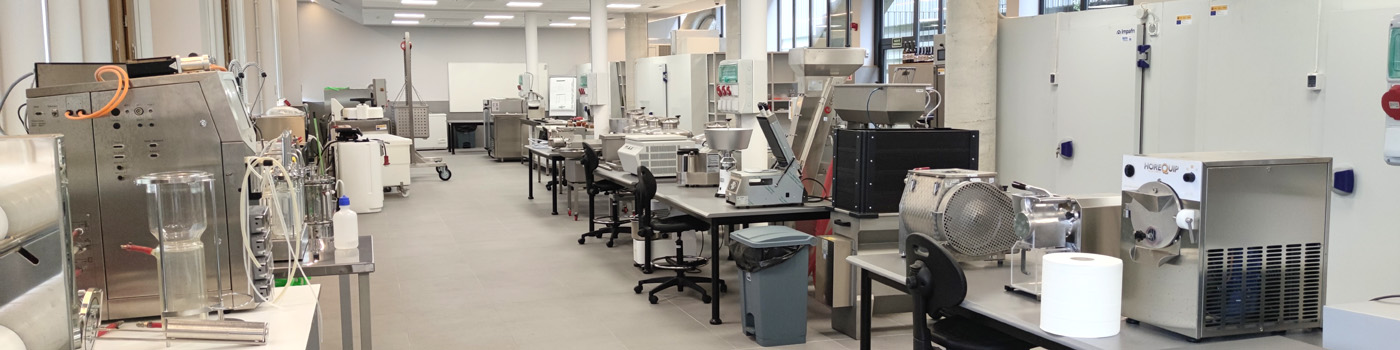
The pilot plant will allow the research groups of the Institute, as well as companies requesting its services, to scale up basic research results to an industrial level. With the aim of covering the most important areas of the Galician food sector, four product processing lines have been designed:
1) Dairy Products Line
2) Seafood and Meat Products Line
3) Vegetable, Canned, and Bakery & Pastry Products Line
4) Beer and Wine Line
The equipment in these lines allows the processing and control of food under conditions similar to those used in the agri-food industry, aiming to study and optimize food production processes and assess the influence of different parameters on product quality.
 Person in charge: María Rosa Pérez Gregorio
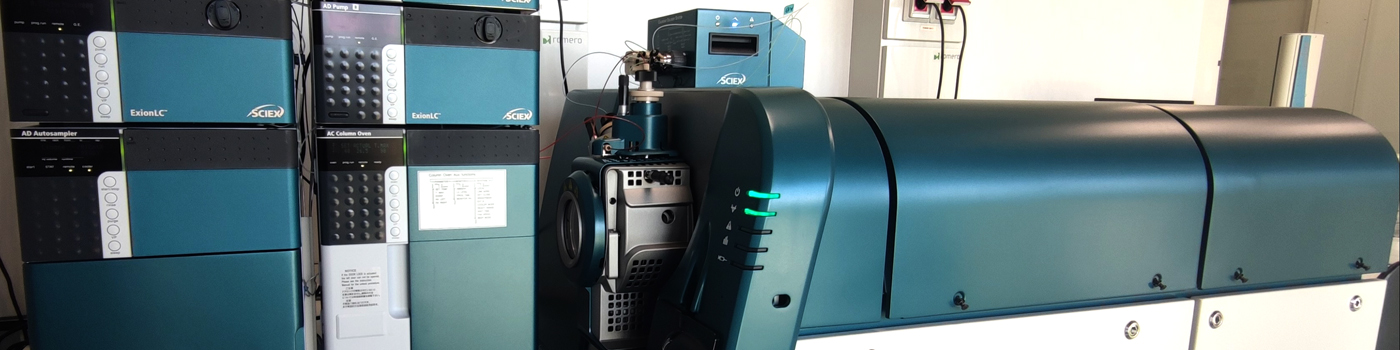
This facility includes two high-resolution, exact-mass mass spectrometry instruments:
1) Nano LC 425 system and SCIEX Triple TOF 660 mass spectrometer. This equipment is used for proteomics, one of the mass-analysis or “omics” techniques aimed at large-scale protein studies, providing information about their biological function.
2) UPLC Exion LC AD system and SCIEX Triple TOF 660 mass spectrometer. This equipment enables advanced research in environmental and agri-food fields, opening new frontiers in the study of persistent organic pollutants (POPs) or antimicrobials and their metabolites, as well as their interactions with other components of environmental compartments (water, sediments, sludge, etc.) and agri-food samples (proteins, lipids, carbohydrates, etc.).
 Person in charge: Gil Garrote Velasco
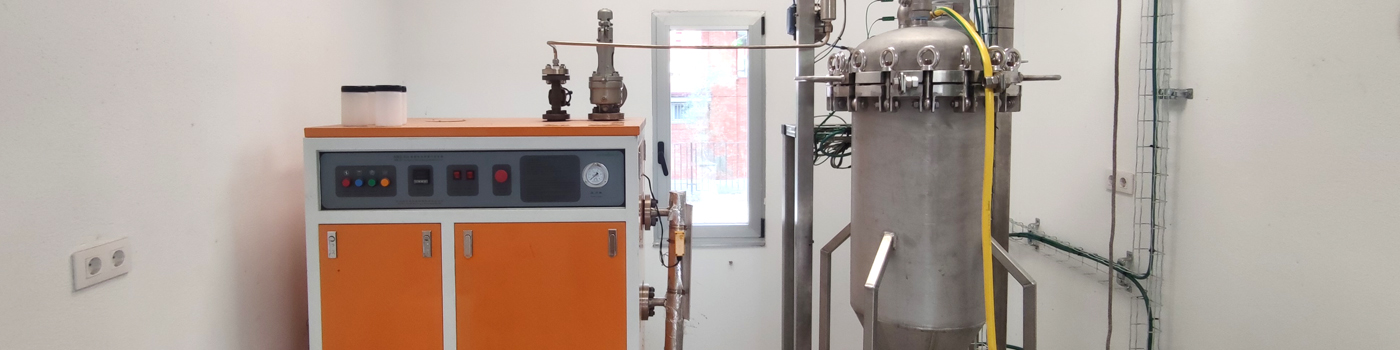
This laboratory is equipped with a steam explosion reactor and a fully mixed titanium reactor.
1) The steam explosion reactor features a 2 L digester and includes a steam boiler capable of reaching 250 °C at the corresponding saturation pressure. The steam-heating setup allows the reactor to reach operating conditions in seconds (a clear advantage over systems using liquid water, which require 30 minutes to several hours). The reactor is opened via a discharge valve that enables sudden decompression, while pressure and temperature are monitored automatically using multiple sensors.
2) The fully mixed titanium reactor allows operation under different stirring rates (up to 100 rpm), pressure (up to 150 bar), and temperature (up to 200 °C). Its titanium construction (as far as we know, the only reactor of this type in Galicia) enables work with any type of reaction medium, including strong acids and bases.
Both reactors allow different types of biomass treatments aimed at valorization through the production of high-value substances, such as biofuels, additives for the agri-food industry, bioplastics, and more.
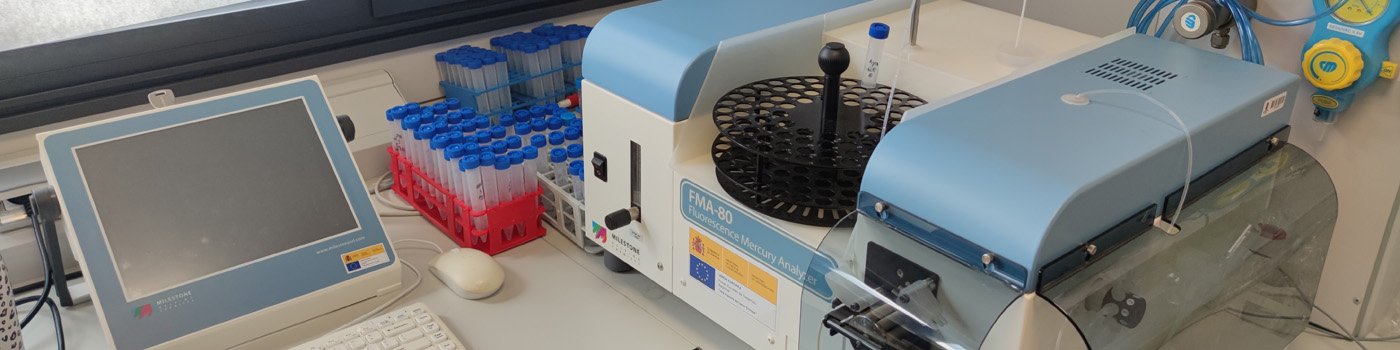 Person in charge: Juan Carlos Nóvoa Muñoz
This laboratory is equipped with two instruments for mercury measurement.
1) Analyzer for organic Hg species (methyl-Hg and ethyl-Hg) using high-performance liquid chromatography with atomic fluorescence detection (HPLC–AFS). The system includes an Hg FS detector, CV generator, software and Hg lamp, autosampler, peristaltic pump, and high-performance liquid chromatograph for measuring Hg species (HPLC–AFS). This equipment allows the determination of organo-mercury species in various environmental matrices (water, soil, sediments, vegetation), food samples, or residues from different sources. In all cases, prior digestion of the samples is required.
2) otal Hg analyzer using atomic fluorescence spectroscopy and cold vapor atomic absorption (CV–AFS–AAS). The system includes an autosampler (36–89 positions), mixing reaction block, gas purification system, peristaltic pump, atomic fluorescence detector (CV–AFS), and a software interface. This equipment is used to determine total Hg levels in aqueous extracts from environmental matrices (water, soil, sediments, vegetation), food samples, and various types of by-products.
 Person in charge: Jose Eugenio López Periago
X-ray computed tomography (CT) is a technique that allows the study of an object’s internal structure without altering it. Using the Yxlon FF20 CT system, it is possible to analyze samples weighing up to 17 kg, with maximum dimensions of 28 cm in diameter and 70 cm in height. Due to these sample size limits, this CT scanner is not intended for medical use (the most common application of X-ray tomography), but rather for the precise determination of the internal morphological characteristics of smaller samples.
CT analysis can be applied in various fields: in soil science, it is commonly used to study pore networks, segment different soil components, and model transport processes; in geology, to parameterize the morphological properties of rocks and minerals; in materials science, to characterize the three-dimensional structure of polymers, foams, and ceramics, among others; in metrology, for the measurement of parts in the automotive or aerospace industries; in paleontology, for the study of fossils; and it can even be used to study and preserve cultural heritage, as it allows the analysis of fragile objects (vases, manuscripts, paintings, etc.) without sampling or compromising their integrity.
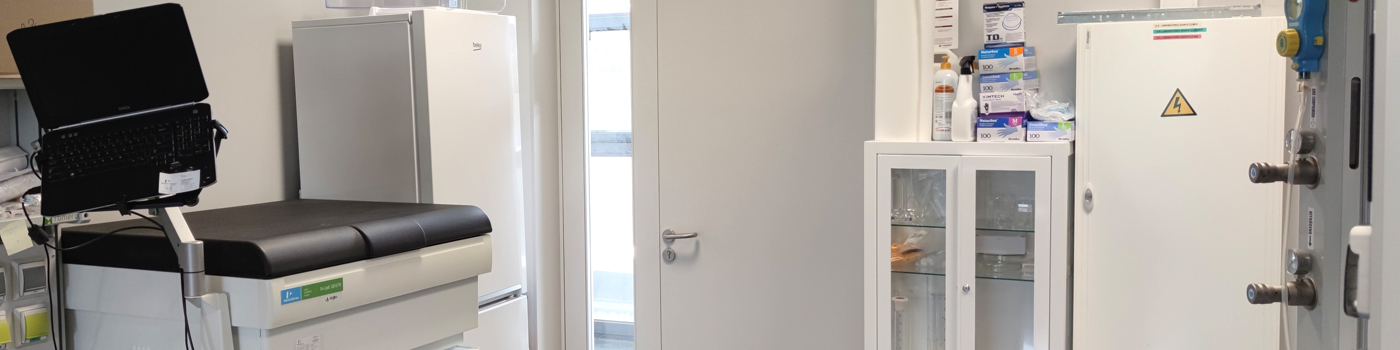 Person in charge: María Flora Alonso Vega
This facility allows work with unsealed radioactive sources of tritium (³H) and carbon-14 (¹⁴C). Among the techniques currently in use are the determination of bacterial growth in soils and waters using the ³H-labeled leucine incorporation method, and the assessment of fungal growth in the same matrices using the ¹⁴C-labeled sodium acetate incorporation method in ergosterol. The facility is equipped with an HPLC with DAD detector connected to a fraction collector for ergosterol separation, as well as a liquid scintillation counter.
 Person in charge: Adela María Sánchez Moreiras
A phytotron is a climate-controlled chamber for plant growth and cultivation that allows simultaneous regulation of temperature, humidity, and lighting, creating the optimal conditions required for the species being grown. Three climate chambers with the phytotron system are located at the Faculty of Biology, and one will be operational in the greenhouse by the end of 2022.
The phytotron can be used for a variety of purposes, including, among others: in vitro cultivation of different plant varieties, studying the chemical profile of plant species under stress conditions and its impact on diet, assessing the invasive potential of non-native species in Galicia, and evaluating the bio-herbicidal capacity of natural compounds on various weeds.
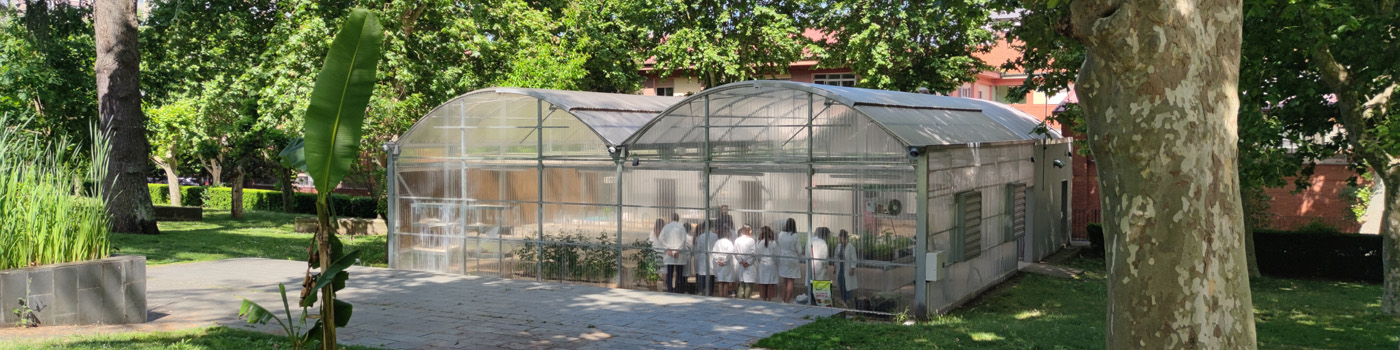 Person in charge: Andrés Rodríguez Seijo
In addition to housing other facilities, the greenhouse allows the cultivation of plants under semi-controlled conditions, providing a larger scale than the phytotron and conditions closer to real-life environments. It enables trials of new fertilizers, biopesticides, and other treatments, as well as phytotoxicity testing of various substances.
Among the objectives of this facility, besides small-scale plant cultivation for research, are the dissemination of plant production methods and the provision of scientific and technical advice to the community, both within and outside the university.
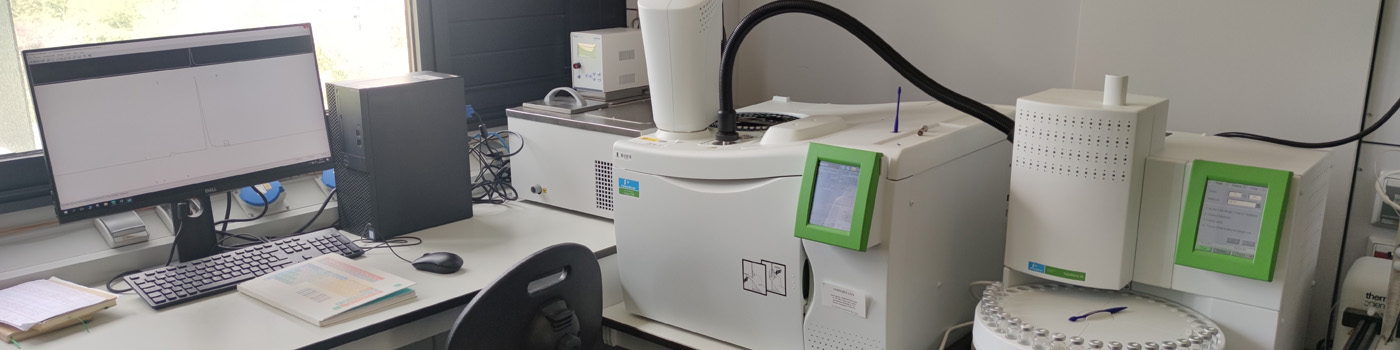 Person in charge: David Fernández Calviño
This facility includes the following equipment:
- ICP-OES, which allows the analysis of numerous elements of the periodic table (with the exception of C, N, O, H, F, noble gases, some rare earths, and other less common elements) in liquid samples.
- Gas Chromatograph with FID and ECD detectors, allowing the determination of greenhouse gases and fatty acids.
- HPLC with a DAD detector connected online to a fraction collector, allowing the separation and collection of substances of interest..
- Agilent 1200 Series HPLC equipped with IR (Refractive Index) and DAD (Diode Array Detector) detectors. It allows the separation, identification, and quantification of compounds in solution from different matrices (agri-food, environmental, pharmaceutical, etc.).
- Agilent 1260 Infinity II UHPLC equipped with RID (Refractive Index Detector) and MWD (Multiple Wavelength Detector). It enables the separation, identification, and quantification of compounds in solution from different matrices (agri-food, environmental, pharmaceutical, etc.).
- Agilent Cary 60 UV–Vis Spectrophotometer. Its wavelength range spans from 190 to 1100 nm. The Cary 60 is ideal as a routine UV–Vis spectrophotometer in the pharmaceutical and biotechnology industries (purity and concentration of APIs), as well as in chemistry, biochemistry, and materials science, and for use in teaching laboratories.
- Fourier Transform Infrared Spectroscopy with Attenuated Total Reflectance (FTIR–ATR) is used to identify and characterize materials through the absorption of infrared light. It enables the acquisition of infrared spectra from solids, liquids, and pastes without the need for dissolution. The wavelength range spans from 400 to 5000 cm⁻¹.
- PCE-RVI 2 Viscometer. It determines viscosity by measuring the mechanical resistance opposing the rotational movement of the spindle (four available: L1, L2, L3, L4). It operates within a range of 20–100,000 cP and features an adjustable speed between 6 and 60 rpm. It is widely used in the food sector and materials science..
- Microwave Plasma–Atomic Emission Spectroscopy (MP-AES) is an instrumental technique used for the quantitative determination of metallic and non-metallic elements in a wide variety of liquid matrices.
- Segmented Flow Analyzer: an automated instrument used in chemical analysis to process liquid samples continuously and efficiently. It enables the determination of bromides, nitrates, nitrites, fluorides, ammonium, phosphates, total alkalinity, sulfates, and chlorides in environmental samples, food and beverages, pharmaceutical quality control, and clinical testing.